Projekt

Implementing a robust heating plan

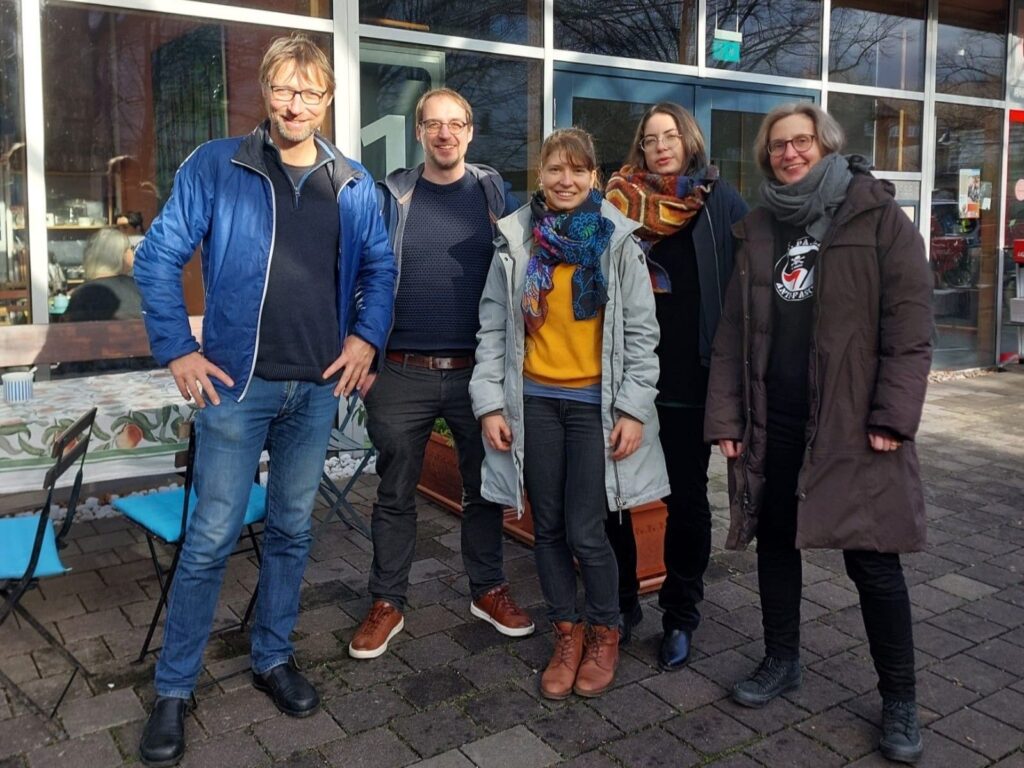
Fünf Menschen stehen nebeneinander und schauen in die Kamera.

Implementing a robust heating plan

Project Duration

09/24 - 08/27


Overview

Even without burning coal, oil, and gas, we need to stay warm—even in winter, even when the sun isn’t shining—by 2045 at the latest. This decarbonization presents a major challenge for us as a society. Cities and municipalities have a key role to play in this effort: they must coordinate the transition of the heating supply and provide planning certainty for all stakeholders.


Participants

Eine Frau mit schwarzen Haaren und einer Brille lächelt in die Kamera. Sie trägt eine grüne Bluse.
Project Lead

Challenges

The project supports local stakeholders in effectively addressing the most pressing challenges currently facing the transformation of the heating sector—with the aim of achieving a socially resilient heating transition. These challenges are indeed diverse:

Stakeholders

There are many stakeholders involved (heating and gas network operators, building owners, tenants, climate protection officers, building authorities and other agencies, the public, and initiatives) and varying starting conditions in neighborhoods and infrastructure.

Costs

The necessary investments in infrastructure are high. The immense costs must be distributed among the various stakeholders in a socially equitable manner.

Technology and Interactions

There are several technical solutions, some of which are viewed with skepticism. There is increasing sector coupling (electricity, transportation, buildings). There are interactions with other planning processes (e.g., urban land-use planning, environmental planning, civil engineering).

Future

Future developments have not yet been sufficiently researched, which could result in high follow-up costs. Political decisions are constantly evolving.

The Solution:

The Federal Act on Municipal Heat Planning, which came into effect on January 1, 2024, serves as a tool for municipalities to tackle this task. The complexity is evident: every municipality is different, each location has distinct conditions and stakeholders, the impacts are long-term, and the investments are enormous. All of this creates potential for conflict. That is why heat planning should be designed to be forward-looking and socially robust. Socially robust in the sense that: 1. Planning is methodologically transparent, clear, and legally sound. 2. The stakeholders involved accept the results and do not view them as unfair. 3. Private, non-directly regulated stakeholders participate in the implementation of the measures in a spirit of trust and in a timely manner.
The project in detail

The project supports local stakeholders in addressing the most pressing challenges of this new field of action in the best possible way—with a view to achieving a socially resilient heating transition: Planning is methodologically sound, transparent, and legally compliant; the stakeholders involved accept the results and do not view them as unfair; and private, non-regulated stakeholders participate in the implementation of the measures in a spirit of trust and in a timely manner.

A support network is emerging within a large consortium of cooperation partners. In this way, municipalities that have already completed their heating plans and are now in the process of implementing the measures contribute their knowledge. Researchers also provide insights that are important for the processes and content of heating planning. This fosters a transdisciplinary dialogue. From this, the project team develops at least twelve solution approaches.

Cities of various sizes, with different legal and political conditions from various federal states and with diverse experiences, are represented in the project. Over time, three of the proposed solutions will be adapted to local conditions and tested in pilot applications. The results: specific recommendations for municipal stakeholders on how to robustly design the process, content, and implementation of heat planning; regulatory options that facilitate decarbonization; and identified research needs.

The project is divided into four phases:

  1. Analyzing the challenges of thermal planning
  2. Compiling a literature review of transformation research, as well as specialized publications based on the practical experiences of stakeholders
  3. Developing new approaches and implementing them in pilot projects
  4. Compiling the results—in a practical and target-group-appropriate manner—and subsequently translating them into policy recommendations.

Project Partners

Universität Freiburg

Universität Marburg

GEF Ingenieur AG

Klima- und Energieagentur BW

Energieagentur Regio Freiburg

Baumann Rechtsanwälte

Stadtwerke Konstanz

Kompetenzzentrum KWW

Stadt Bruchsal

Stadt Bad Nauheim


Project Funders

Bundesministerium für Wirtschaft und Klimaschutz